Fun Run 4: Multiplayer Racing
- 4.8
- Rating
- 1.00M
- Installs
- Free
- Price

 Analysis by App-foxy
Fun Run 4 is a racing game built around one clear idea: the race is more exciting when other people are trying to beat you at the same time. I found that its strongest quality is not simply speed, but the way a short multiplayer run turns into a small tactical contest. You are watching your own route, reacting to hazards, and trying to read what the other runners might do next.
Developed by Dirtybit, it sits in the casual racing side of mobile gaming rather than aiming for realistic driving. That makes it easy to pick up when I have only a few minutes, while the player-versus-player focus gives each race more tension than a routine time trial. It is free to download, with optional purchases ranging from $0.99 to $99.99 per item, so the main decision is whether you enjoy competitive sessions enough to ignore the temptation of spending on extras.
Why the real-time race matters
The defining capability here is live competition against other runners. Instead of treating the course as a fixed challenge that I can learn alone, the game makes every attempt feel responsive. A route that seems comfortable when I am practicing my movement can become much harder when another player is close behind or just ahead.
You May Also Like

 Blood Strike: 2.5 Anniversary
Blood Strike’s Loadouts Turn Every Drop Into a Tactical Gamble
A close look at Blood Strike’s custom loadouts: how fast access to signature weapons reshapes its battle royale rhythm, rewards preparation, and narrows the gap between fights.

 Pandora - Music & Podcasts
Pandora’s Music Is Easy to Start, but Harder to Recover
Pandora’s strength is its low-effort path from a seed to a station. Its weak spot is how much confidence it asks you to place in connection, setup, and quiet recovery.

 8 Ball Pool
 Is Built on Rivalries, Rematches, and Routine
A close look at the rivalries, rematches, shared routines, and unanswered safety questions that turn a quick pool match into a persistent mobile community.

 Samsung Music
’s Quiet Strength Is Playing What You Already Own
Its reach comes less from spectacle than from dependable access to a personal library. That simplicity is both the app’s strongest retention engine and its ceiling.

 AccuWeather: Weather Radar
AccuWeather Review: A Quick, Clear Forecast for Everyday Decisions
For everyday plans, the best forecast is the one you can understand quickly. AccuWeather makes rain timing, radar, and local conditions easy to act on, with a few trade-offs.

 Hill Climb Racing
Why Hill Climb Racing Still Turns Crashes Into One More Run
A tiny car, a bumpy hill and one more upgrade: Hill Climb Racing keeps resurfacing because its simple chaos makes every near-miss feel personal.
More From Our News Desk
View All News


That difference changes how I play. In a normal arcade racer, I might focus on the cleanest line and repeat it until I improve. In this game, I have to balance speed with awareness. Taking the fastest-looking path is not always the best decision if it leaves me vulnerable to a mistake, a hazard, or a rival who has chosen a smarter moment to push forward.
The result is a compact kind of strategy. I am not planning a long championship or tuning a vehicle for a detailed simulation. I am making quick decisions during a short run, often with very little time to correct them. The multiplayer pressure gives ordinary movement choices real consequences.
That makes Fun Run 4 especially appealing to people who like friendly rivalry. It works well when a group wants something more active than a board game but less demanding than a full console racing session. The experience is also suitable for casual players because the basic premise is immediately understandable: run, avoid trouble, and finish ahead of the competition.
The game is listed for Everyone 10+, which fits its approachable presentation while recognizing that the competitive action may be more suitable for older children and adults than for very young players. I would still recommend that parents consider how their child responds to competitive play and optional purchases before handing over a device.
What I notice during an actual race
When I start a session, I do not need to spend a long time learning a complicated control system before the action becomes meaningful. The important skill is building a rhythm: move decisively, watch the course, and avoid letting the excitement of being close to another runner make me careless.
The most interesting moments usually happen when the race is tight. If I am far behind, the goal becomes recovery. If I am leading, the challenge changes because I am trying to protect that advantage rather than simply move forward. A small error can matter more when the pack is close together, and that keeps me engaged even when the course itself is familiar.
This is also where the game differs from racing against computer-controlled opponents or chasing a personal best. A personal-best attempt is calm and measurable. A live race is less predictable. Another person may take a risk that I would not take, recover from a mistake differently, or force me to change my plan. I enjoy that uncertainty, although players who prefer complete control may find it frustrating.
My practical advice is to treat early races as observation rather than as tests of perfection. Pay attention to where you tend to lose momentum, which sections make you rush, and whether you are reacting to the course or merely following the runner in front. That last habit can be costly: copying another player is not always the same as choosing the safest or fastest route for yourself.
A useful way to play with friends
The store summary emphasizes racing with friends, and that is the setting where I think the game makes the most sense. A quick session can fill an awkward gap in the day: waiting for food, relaxing after work, or sitting with friends when nobody wants to commit to a long game. Because the competition is immediate, there is little need for a large time investment.
In a group, I would suggest agreeing on a simple rule before starting: play a few races without spending anything and decide whether everyone enjoys the competitive loop. That prevents the session from becoming a discussion about purchases before anyone has worked out whether the core racing is fun for them.
Another useful habit is to rotate who chooses when to play. One person may prefer aggressive racing, while another enjoys careful recovery after a mistake. Sharing the session helps reveal whether the game appeals to the whole group or only to the friend who already likes fast multiplayer contests.
For solo players, the value is different. You still get the tension of competing with other people, but the social atmosphere may not be as strong. If your main goal is a quiet racing game where you can pause frequently, repeat a section, and improve without outside pressure, a traditional single-player racer may suit you better.
Where the competitive design creates friction
Real-time competition is the game’s main strength, but it is also the source of its biggest limitation. I cannot approach every race at my own pace. When I am tired, distracted, or playing with an unstable connection, the pressure that normally makes the game exciting can make it feel less forgiving.
There is also a psychological trade-off between quick matches and meaningful results. A short race is convenient, but a mistake can feel disproportionately important because there may not be enough time to recover. I like that intensity in small doses; I would not want every mobile game I play to demand the same level of attention.
Optional purchases are another point to consider. The game is free, which lowers the barrier to trying it, but the listed purchase range reaches from $0.99 to $99.99 per item. I recommend treating spending as completely separate from skill development. Before buying anything, I would first ask whether the purchase improves enjoyment for a specific reason or is simply a reaction to losing a close race.
That distinction matters in competitive games. If I lose because I rushed a section or failed to watch the course, spending will not fix the underlying habit. I get more value by identifying the decision that caused the mistake and changing my approach in the next run.
Players should also be comfortable with the possibility that a multiplayer outcome will not always feel perfectly satisfying. A strong performance can still end in a loss, and a lucky recovery can sometimes produce a result that feels better than the quality of the run deserved. I see that as part of live competition, but people who want clean, predictable progression may prefer a more structured racing experience.
Small habits that make the races more enjoyable
My first practical tip is to separate movement practice from competitive ambition. During the opening sessions, I focus on recognizing the course and controlling panic. Trying to win immediately encourages me to copy risky behavior or make rushed choices before I understand my own weaknesses.
Second, I pay attention to the difference between being behind and being out of the race. A poor start does not automatically mean the run is finished. Staying composed can create opportunities later, while repeatedly forcing a recovery usually produces another mistake. This mindset is particularly useful for players who become frustrated after falling behind.
Third, I use short sessions deliberately. The game is at its best for me when I decide in advance to play a handful of races, then stop while the competition still feels fresh. That keeps losses from turning into an endless attempt to immediately win back a result. It also suits the mobile format better than treating every session like a long evening commitment.
For families, I would keep purchases protected through the device’s normal settings and make the spending rules clear before play begins. The game’s free entry is convenient, but optional items can become a distraction if a child associates a loss with the need to buy something. A simple limit and shared understanding make the experience easier to manage.
For friends playing together, I would avoid judging the game after one unlucky race. The competitive format naturally produces swings in momentum. A better test is whether the group enjoys discussing what happened afterward: who took the safer route, who recovered well, and which decision changed the result. If that conversation is fun, the game has probably found its audience.
How it compares with other mobile racing choices
Compared with a realistic driving game, Fun Run 4 is much more immediate. There is no need to learn vehicle handling, manage a long event, or commit to a simulation mindset. I would choose it when I want the race itself to be the entertainment, not the process of building a detailed car setup.
Compared with a solitary endless runner, the multiplayer element gives each attempt a stronger sense of occasion. An endless runner can be excellent for chasing a personal score, but the goal is mainly to beat my previous performance. Here, the presence of other players changes the emotional rhythm. I am not only asking whether I can improve; I am asking whether I can make the right decision before someone else does.
On the other hand, a single-player racer is often better for relaxation, repetition, and precise self-improvement. If I want to pause whenever I like or repeat the same challenge without social pressure, I would choose that alternative. Fun Run 4 is the better choice when unpredictability and rivalry are the reason I opened a racing game in the first place.
It also differs from longer competitive games that require a large community commitment. This is easier to fit into everyday life because the central activity is a quick race rather than a lengthy campaign. The trade-off is that the experience may feel lighter and less substantial to someone looking for deep progression, extensive customization, or a story-driven reason to keep playing.
Who gets the most from it
I think the best audience is someone who enjoys arcade racing, quick multiplayer matches, and the small tactical decisions that happen under pressure. It is a particularly good fit for friends who want a shared game that can start quickly and does not require everyone to learn a complicated ruleset.
It may also work for a player who normally likes endless runners but wants more direct competition. The shift from chasing a score to reacting to rivals gives familiar running mechanics a different purpose. You are still trying to move efficiently, but your decisions are judged against other people rather than only against a previous attempt.
I would be more cautious about recommending it to players who dislike losing to human opponents, need a fully offline-style experience, or want realistic cars and tracks. The same live pressure that keeps me interested may feel stressful to someone who plays games mainly to unwind. It is also not the right pick for anyone who expects every meaningful improvement to come from unlocking or tuning a vehicle.
The game has attracted a substantial audience, with over a million installs and an average rating of 4.7 from roughly thirty-six thousand ratings. Those figures suggest that its central formula connects with many players, but they do not remove the personal question of whether competitive running is your kind of fun.
Device requirements and long-term appeal
The current version is 2.37.1, and the game can run on Android 8.0 or later. That makes it accessible to people who are not using the newest phone, although actual comfort will still depend on the device and the quality of the connection during multiplayer play. I would close other demanding apps before a serious session, especially if a race matters to me.
Long-term appeal depends less on discovering a large world and more on whether I enjoy repeating the competitive loop. The game can stay interesting when I am learning from mistakes, playing with friends, or trying to become more consistent. It is less compelling if I need a constant stream of new systems or a substantial narrative to justify returning.
My approach is to judge progress by decision quality rather than only by finishing position. Did I stay calm after a poor start? Did I choose a sensible route instead of copying another player? Did I stop before frustration took over? Those questions make the game more rewarding and reduce the urge to chase a result through unnecessary spending.
My recommendation
Fun Run 4: Realtime PvP Race is a focused arcade racing game whose live competition gives short sessions genuine tension. I like it most when I am playing with friends or when I want a fast challenge that demands attention without asking me to study a complex simulation.
Its free entry makes it easy to test, and the 10+ age guidance gives families a useful starting point for deciding whether the tone and competition are appropriate. The optional purchase range means I would set spending boundaries early, but I do not see that as a reason to skip the game if you are happy to judge it on the racing itself.
My recommendation is simple: try it if the idea of outthinking another runner in a short, hectic race sounds fun. Skip it if you want quiet solo practice, realistic driving, or a long-form progression system. For the right player, its greatest strength is the way a few minutes can become surprisingly personal: every lead feels earned, every mistake is visible, and every rematch offers a chance to make a smarter choice.
FAQs for Fun Run 4: Multiplayer Racing
01What is Fun Run 4: Realtime PvP Race about?
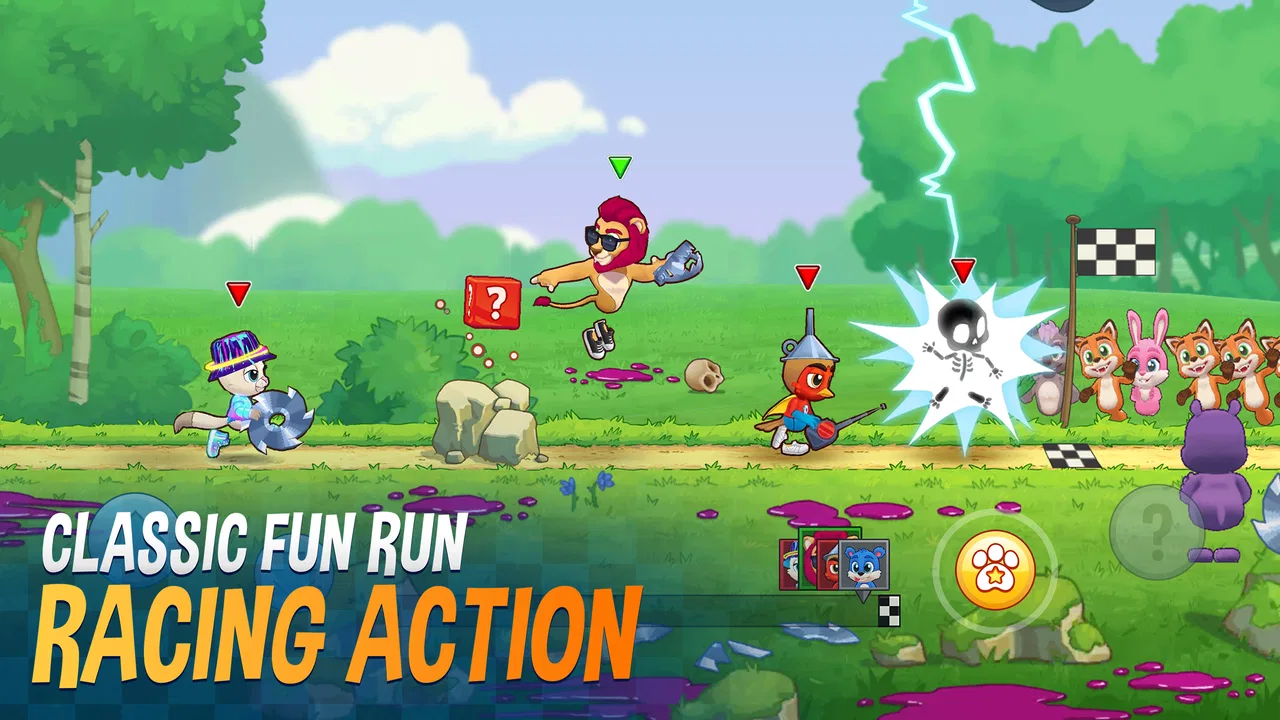
Fun Run 4 is a competitive multiplayer racing game where players control cute characters in a vibrant, side-scrolling world. The game focuses on real-time player-versus-player (PvP) races, allowing you to race against friends or random players worldwide. It features various obstacles and power-ups, adding strategy and excitement to each race.
02Is Fun Run 4 free to play?
Yes, Fun Run 4 is free to download and play. However, it contains in-app purchases that allow players to buy items like costumes, power-ups, and other customization options. While these purchases can enhance your experience, they are entirely optional and not necessary to enjoy the game fully.
03What platforms is Fun Run 4 available on?
Fun Run 4 is available on both Android and iOS platforms. You can download it from the Google Play Store for Android devices and the Apple App Store for iOS devices. Ensure your device meets the minimum system requirements for optimal performance and gameplay experience.
04Can I play Fun Run 4 with friends?
Absolutely! Fun Run 4 is designed for multiplayer action, and you can easily invite your friends to join races. You can connect with them via social media or in-game friend lists. This social aspect enhances the fun, as you compete directly against people you know in real-time races.
05Are there any age restrictions for playing Fun Run 4?
Fun Run 4 is generally suitable for all ages, but it is recommended for players aged 9 and up due to its competitive nature and mild cartoon violence. Parents can rest assured that the game is designed to be family-friendly, with content that is appropriate for children.
Pros
- Engaging real-time multiplayer racing.
- Diverse character customization options.
- Frequent updates with new tracks.
- Easy to learn gameplay mechanics.
- Active community and competitive events.
Cons
- In-app purchases can be pricey.
- Occasional connectivity issues.
- Ads may interrupt gameplay.
- Limited offline play options.
- Some features require premium access.

Fun Run 4: Multiplayer Racing
Gallery